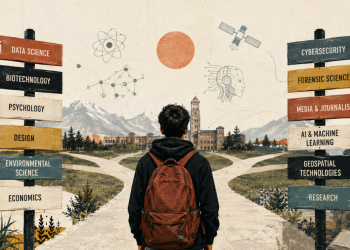

A recent decision in Bihar has raised an interesting question about how governments communicate with people in the age of Instagram, YouTube and short-form video. The Bihar Cabinet has approved changes to its social media rules that will allow empanelled creators making content about government schemes, development programmes and government initiatives to receive ₹10,000 for every one lakh verified views, subject to the prescribed conditions, with the payment capped at ₹1 lakh per video. The views will be assessed after 30 days, and the state’s Information and Public Relations Department is expected to issue further details on eligibility and verification.
Bihar is not alone in this shift. Jharkhand has also been developing an influencer engagement policy, particularly for tourism. The larger change is that governments are beginning to treat digital creators as a legitimate part of public outreach rather than a nuisance to be managed. What was once an experiment is starting to look like a template.
The idea is worth looking at beyond the headline figure. Governments spend considerable amounts of money trying to communicate schemes and public programmes through traditional newspaper or TV ads, but a government announcement does not automatically become useful information simply because it has been published. The person receiving the information matters, as does the language, format and platform through which it reaches them.
This is where Jammu and Kashmir could learn something.
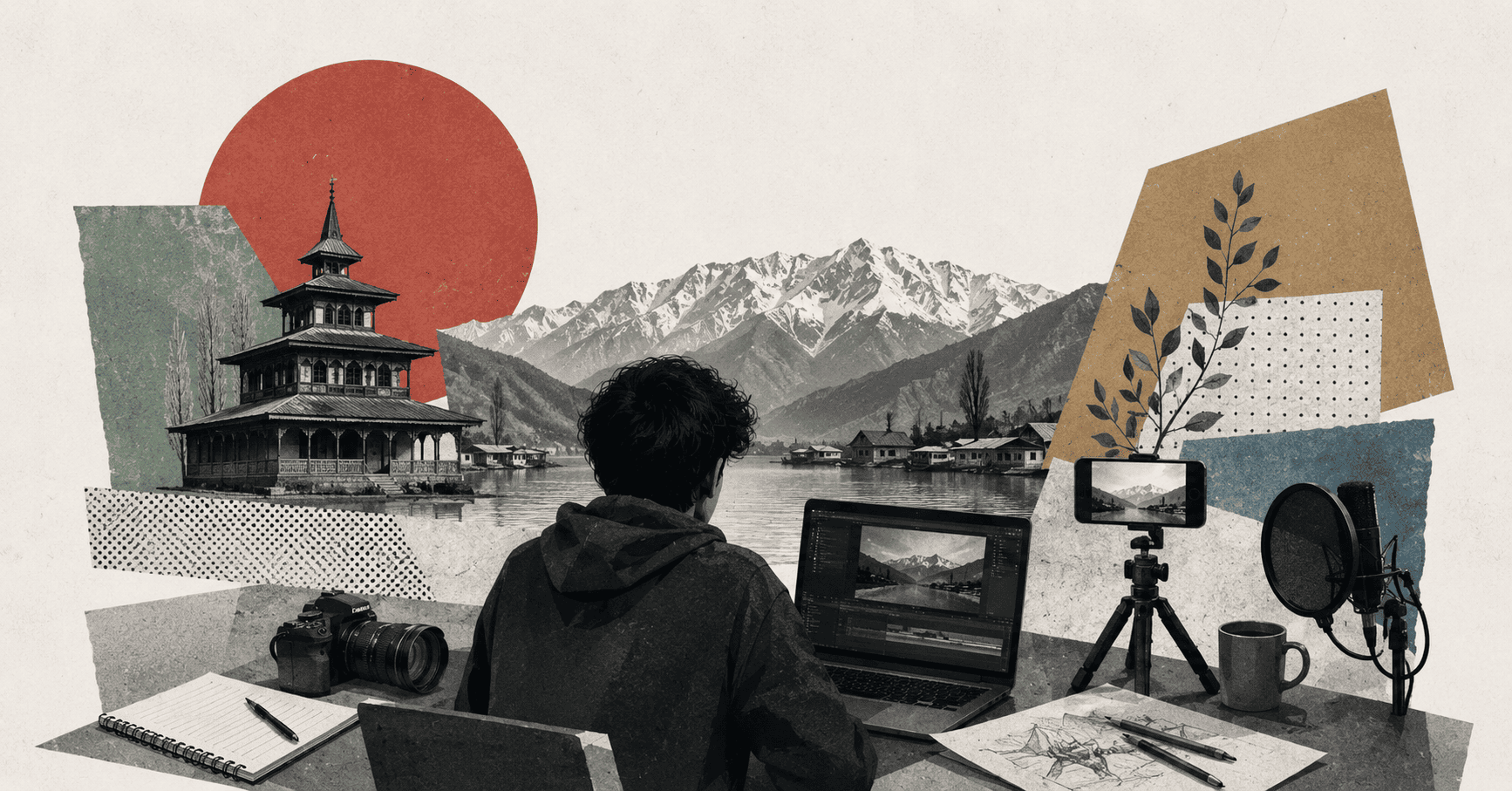
Kashmir already has a growing community of artists, filmmakers, photographers, writers, musicians and social media creators who understand how people here consume content. Many of them have built audiences without the backing of large media companies or advertising agencies. They know the references, humour, language and everyday concerns of their audience in a way that an official government advertisement often cannot.
The government should make greater use of this talent.
Imagine a public-awareness campaign about road safety created by a Kashmiri filmmaker rather than another generic government video. Imagine an artist explaining waste management through a short animated film, a popular Kashmiri creator explaining a government scholarship in Kashmiri, or a musician helping communicate a message about drug addiction, mental health or environmental protection. These would not have to look like advertisements. They could be creative, locally rooted pieces of public communication that people might actually choose to watch.
This is not simply about making government messaging more entertaining. It is also about creating an ecosystem in which artists and creators can earn from their work.
Kashmiri-language creators face an added challenge. While they may have strong local audiences, regional-language content generally earns less from digital advertising than English or Hindi content. For Kashmiri creators, whose audience is relatively small and spread between the Valley and the diaspora, this makes it difficult to turn even a significant following into a sustainable income through conventional platform advertising. Industry estimates put English language content at three to five times the ad revenue of Hindi content in the same category, and five to eight times more than content in a regional language.
That creates a strange situation. Kashmir has people capable of producing excellent digital content, and it has an audience that consumes enormous amounts of content every day, yet the economic bridge between the two remains weak.
Public institutions can help address this gap by working with creators on public-interest communication. Such collaborations could help government programmes reach audiences in more engaging, accessible and locally relevant ways while providing creators with meaningful professional opportunities. A structured programme in Jammu and Kashmir could include clear guidelines, transparent selection criteria and appropriate disclosure of government-supported content, making these collaborations useful and credible for both the public and the creators involved.
And the opportunity extends beyond digital creators.
Nations and societies are remembered not only for their buildings, policies and economic achievements but also for the art they produce: their music, films, poetry, humour and songs. None of that is created by accident. It takes two things: an atmosphere where an artist can say what they actually think without fearing a knock on the door, and a livelihood that allows them to continue doing the work. An artist constantly worried about whether the next project will pay the bills has less room to experiment, take risks and produce work that may eventually become culturally important.
Kashmir has never lacked the first ingredient, talent. What it lacks is a sufficiently developed ecosystem around them.
There are plenty of areas where this approach could work. Public-health campaigns could involve filmmakers. Tourism campaigns could involve photographers and travel creators. Environmental programmes could involve illustrators and musicians. Language and cultural initiatives could work with writers, poets and digital creators. Government departments dealing with education, employment and digital literacy could also benefit from creators who understand how young audiences consume and share information.
There is also a practical reason to involve Kashmiri creators: language.
A message delivered in the language people use at home can often feel very different from one translated into that language after being written elsewhere. Local creators understand expressions, humour and cultural references that cannot always be captured by a standard communication template. They also understand what their audiences ignore, what they share and what makes them stop scrolling.
That knowledge has value.
The government does not need to build an entire creator economy from scratch. The people are already there. The audiences are already there. What is missing is a structured way to bring the two together.
Bihar’s new policy offers one possible model, although Jammu and Kashmir would not need to copy it exactly. A local programme could create an open panel of eligible creators and artists, publish clear rates and selection criteria, commission work for specific public-interest campaigns and disclose when content is government-funded. Payments could be based on the work itself, reach, production requirements or a combination of these factors rather than simply rewarding whoever manages to go viral.
There should also be room for smaller creators. If government communication becomes another game where only accounts with hundreds of thousands of followers qualify, many of the most culturally relevant voices will be left out. A creator with 20,000 highly engaged Kashmiri followers may sometimes be far more useful for a local campaign than a generic influencer with a much larger but geographically scattered audience.
There is a larger opportunity here. Instead of viewing artists and creators simply as people who make Instagram reels, governments can recognise them as communicators, storytellers and cultural workers. They can help explain policies, document local history, promote public health, encourage environmental responsibility and make public information more accessible.
And if the government is asking them to do that work, they should be paid properly for it.
Jammu and Kashmir does not need another campaign telling young people that they should become creators. It needs to create conditions in which the creators it already has can actually build sustainable careers.
Bihar has started a conversation about putting a price on digital reach. Jammu and Kashmir should perhaps start a different one: what could happen if we invested in the people who already know how to speak to Kashmir?